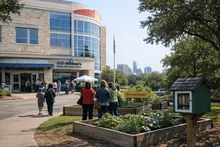
On a recent weekday morning along East 51st Street, the walk up to LifeFamily Learning Center was quieter than usual. Parents lingered by the doorway, swapping leads on waitlists and texting potential backups. The center at 1504 E. 51st St., a fixture for families in the Mueller neighborhood, had announced it would close on December 19, 2025, before extending the timeline to January 30, 2026, after an outcry from families who said the notice landed just as the holidays began and options narrowed.
Parents scramble for care
The extension provided a sliver of breathing room, but the shock has not faded. “All families involved are devastated, and at a loss as to how we’re going to find childcare during the holiday season or in time for the new year,” a parent said, in comments carried by KEYE-TV/CBS Austin.
In a Dec. 8 letter referenced in local coverage, the LifeFamily Leadership Team wrote: “Although the closure must still move forward, we have adjusted our plan in response to your feedback. We hope that this additional 30 days provides more time for families to secure new placements for your children and for our teachers to transition well.” The excerpt appeared in reporting by KEYE-TV/CBS Austin.
Families also organized to support staff, launching a GoFundMe that has raised more than $17,000, and some staff reportedly received little to no severance, according to KEYE-TV/CBS Austin. The center’s leaders cited ongoing financial losses despite efforts to stabilize enrollment and trim expenses.
A neighborhood institution and its roots
LifeFamily Learning Center was founded by LifeFamily Church Pastor Randy Phillips and his wife Denise. The center describes its approach as emphasizing character development, critical thinking and spiritual growth, alongside academics—an ethos that drew many Mueller families seeking care close to home.
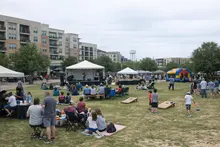
The departure of a familiar provider is also a reminder of how fragile the early education market remains, even in neighborhoods that have boomed. In Mueller, where new apartments and townhomes rise against parks and storefronts, a lost classroom seat can ripple through commutes, work schedules and household budgets.
Why centers are closing
The pressures facing LifeFamily echo across Texas. Nearly half of licensed child care centers in the state are at risk of closing, a finding tied to surging liability insurance, the end of pandemic relief and reimbursement rates that don’t keep pace with costs, according to Click2Houston, which reported on the Texas Licensed Child Care Association’s warnings.
Costs and workforce realities compound the problem. Infant care in Texas averages about $777 per month, while child care workers earn roughly $12 per hour, and the state has lost about 5,000 licensed programs since the pandemic—a 27% decline—according to The University of Texas at Austin. “Child care is poised to become one of the paramount policy issues confronting the Texas Legislature when it convenes again,” said Steven Pedigo, a professor and director of the LBJ Urban Lab. The University of Texas at Austin.
Staffing shortages add to the squeeze: centers across Central Texas have struggled to recruit and retain teachers, capping enrollment and raising costs; some used temporary federal aid to boost wages but questioned whether the increases could last, according to Hoodline.
What city policy means—and what’s next
Austin has begun to reshape the local landscape in hopes of expanding supply. Zoning reforms approved in 2023 opened roughly 77,000 additional acres where child care centers can operate and expanded the allowable area within designated child care deserts by about 200%, according to Community Impact. City leaders also authorized a 100% property tax exemption starting in 2024 for qualifying centers that participate in the Texas Rising Star program and serve a set share of subsidized children, aimed at easing costs as federal relief ends, per Zaentz Navigator (Harvard GSE).
At the county level, voters approved a new stream of funding designed to stretch beyond zoning fixes. The $75 million per year “Raising Travis County: Child Care and Out-of-School Time Fund,” created by Proposition A in November 2024, is set for full rollout in 2026 to expand scholarships, add provider capacity, and support care during nontraditional hours, according to Travis County.
For families and providers, the patchwork of policies offers potential relief, but the timeline matters. In Mueller, parents facing a January deadline still need immediate seats.
- Zoning changes may help new providers open, but facilities take time to finance, staff and license, as outlined by Community Impact.
- Property tax exemptions can stabilize existing centers that meet quality and subsidy thresholds, according to Zaentz Navigator (Harvard GSE).
- The county fund aims to increase affordability and supply starting in 2026, including scholarships and capacity grants, per Travis County.
The view from Mueller
For families at LifeFamily Learning Center, the extension to January 30, 2026, buys time without offering certainty. It will take persistent policy follow-through—and dollars—to turn zoning and tax relief into actual classrooms with stable staff. The statewide headwinds are strong, and the numbers on costs, wages and program losses suggest this is not a one-off event but part of a larger reshuffling of early care across Texas.
Still, the neighborhood’s response—rallies of support for teachers, quick fundraising to bridge a difficult month—signals a community unwilling to accept fewer options for its youngest kids. As the Legislature, county and city move from plans to implementation, what happens on this block in Mueller will be an early test of whether policy can meet parents where they are: on the curb at drop-off, looking for a door that stays open.