A neighborhood-first test for a regional resilience push
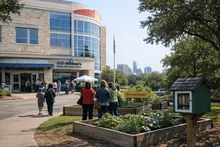
In Mueller, where a dense grid of homes, parks and small businesses sits just a few miles from downtown, the Austin–San Antonio region’s selection for a new climate resilience accelerator lands close to the sidewalk. The two-year initiative is built to produce a regional roadmap, but its credibility will rest on whether neighborhoods like Mueller see practical upgrades: reliable cooling during extreme heat, backup power at trusted community sites, and walkable access to supplies when storms knock out roads and services.
The Climate Resilient Communities Accelerator is led by the national nonprofit Center for Climate and Energy Solutions, which will convene local governments, private partners and residents to co-develop a two-year plan aimed at tangible projects, according to the Center for Climate and Energy Solutions. Travis County framed the selection as a chance to mobilize across jurisdictional lines. “Government boundaries may define jurisdictions, but they don’t define the lives of our residents — people don’t care who is responsible, they care that we get it done,” said Travis County Commissioner Ann Howard. “We saw that spirit in action during the July Fourth floods, when emergency teams from across the region and country came together without hesitation. Our region is vulnerable, and it’s our shared responsibility… to act with urgency before the next disaster strikes,” she said in a release by the Austin Monitor.
At the neighborhood level
Austin has already piloted resilience hubs designed to distribute basic supplies and food during winter storms, a model officials say will now evolve toward community-anchored networks that residents can reach on foot. “The direction that we took it at the city over a couple of years was focusing on rec centers and community centers and libraries, in places where the community felt safe and were open to the public,” said Zach Baumer, the city’s climate action and resilience director. “But that work is transitioning to be more community-focused, where it goes far beyond just what the city offers. When you look at our facilities, we don’t really get within walking distance to everybody’s house. But if you start looking at churches and businesses and grocery stores and all sorts of things, you really do get to that point,” he told the Austin Monitor.
For Mueller, that shift aligns with the neighborhood’s mixed-use layout. A hub-and-spoke approach—anchoring resilience services at well-used, trusted sites—could put cooling, charging and medical support within a short walk. The accelerator is expected to help cities match those ideas to funding strategies and design standards, so that hubs can add features like solar-plus-storage microgrids and redundant communications where feasible.
San Antonio, for its part, has been building from the block up. Its Climate Ready Neighborhoods program links residents with training, resources and small grants to organize resilience “by the block,” as described in local program materials summarized by the Austin Monitor. The two city approaches are complementary and likely to cross-pollinate through the accelerator’s shared planning.
Where the region stands
The Austin–San Antonio corridor is home to more than 5.2 million people, with roughly 3.9 million along the I‑35 spine in Bexar, Comal, Hays and Travis counties, according to San Antonio–Austin metroplex data. Greater San Antonio alone counts about 2.56 million residents in its metro area, per San Antonio figures.
Population growth has been fastest on the Austin side, and its workforce brings higher-than-average educational attainment—about 47.3% of Capital region residents hold a bachelor’s degree or higher, according to the Texas Comptroller. That can accelerate planning and technical capacity. But vulnerability is not distributed evenly. “Research demonstrates Central Texas is in desperate need of community-based resilience planning efforts,” said Thomas Ptak, a Texas State University associate professor. “While large urban areas are well resourced and have established robust climate policies and strategies, residents located in peri-urban areas and smaller cities such as San Marcos are increasingly vulnerable due to a lack of resources and formal plans to develop and enhance resiliency,” he said in a release carried by the Austin Monitor.
The funding and policy landscape
Texas has expanded state tools that local leaders can tap. Lawmakers approved more than $2 billion for new water supplies and flood prevention, and expanded land for state parks, according to reporting by The Texas Tribune. Senate Bill 7 created the Flood Infrastructure Fund with a constitutional allocation of roughly $793 million to finance mitigation projects, including nature-based approaches, documented by Texas Living Waters Project.
On the grid side, the Legislature’s SB 75 elevates municipal and electric system resilience and notes that power failures disproportionately threaten elderly and otherwise vulnerable residents—an equity concern squarely in play when designing hubs, per the Texas Legislature - SB 75. Provisions in HB 1044 emphasize early warning, emergency preparedness and risk assessment in adaptation policy, according to the Texas Legislature - HB 1044.
Local dollars are moving too. Austin’s recent $47.85 million Climate Pollution Reduction Grant is aimed at transit, bikeshare and trip reduction—initiatives that also cut heat and air-quality exposure risks—reported by Environment America.
Lessons from flooding
The July 4 Hill Country floods were a blunt stress test. At least 130 people died along the Guadalupe River and more than 160 were reported missing in the storm’s aftermath, underscoring gaps in preparedness and communication, according to The Guardian. Analysts later flagged failures in river sensors, flood mapping and alerting that left residents unprotected, a pattern detailed by the Certified Meteorologists Association. Better sensors and highly visible warnings—flashing lights or sirens—could have reached more people in rural areas, experts told the Houston Chronicle.
Local responders are pushing to strengthen what works. “Comfort's always had a siren. We've always used it one way or the other,” said Assistant Chief Danny Morales, who added, “Anything we can do to add to the safety, we're going to sit down and try to make it work,” in coverage by ExpressNews. Community memory matters too: “Kerrville is flash flood alley. I know; I grew up there,” said disaster sociologist Roni Fraser, in an interview with ASU News.
For Mueller, these lessons translate into practical design: redundant power for cooling centers; backup communications that don’t depend on cellular networks; and low-tech alerts and door-to-door networks that complement phone-based warnings. The accelerator’s value will be in standardizing these features across a hub network so neighbors know exactly where to go and what to expect.
What private partners bring
The accelerator leans hard on private-sector engagement, a through line in C2ES’s previous regional work. On Colorado’s North Front Range, the effort convened utilities and companies across engineering, finance, health care and tech to focus on wildfire and heat resilience, highlighting a role for resilience hubs and microgrids; the state later invested $2.1 million in microgrids and the process helped catalyze a partnership between AT&T and the City of Longmont, according to the Center for Climate and Energy Solutions.
That template maps cleanly to Austin’s next wave of hubs. Grocers, pharmacies, clinics, faith congregations and apartment owners can offer sites that are open, trusted and close. The city’s pivot toward that model—described by Baumer—suggests Mueller residents could ultimately see multiple hub locations within walking distance, each with a different strength, from refrigeration for medications to shaded outdoor space and device charging.
What comes next for Mueller residents
Over the next two years, the accelerator will convene regional workshops and neighborhood listening sessions to shape project lists and funding plans, according to the Center for Climate and Energy Solutions. For Mueller, residents should watch for:
- A map of prospective hub locations and services prioritized for extreme heat, power outages and flooding.
- Pilot investments in backup power, cooling and communications at one or more community sites.
- Regional coordination on alerts and outreach that treats Mueller as part of a larger network rather than a standalone effort.
The stakes span beyond one neighborhood. The Austin–San Antonio corridor is growing quickly, and the peri-urban communities between and around the two cities face the greatest gaps in resources and plans, as Ptak noted via the Austin Monitor. If the accelerator can knit together city programs, state funding and private partners into a common playbook, Mueller’s on-the-ground improvements could double as a model for the rest of the region—where the next storm won’t stop at a city limit sign.
Read the press release on austinmonitor.com.