The crash and the charges
Five pedestrians were struck outside Raising Cane's Chicken Fingers at 415 W. Martin Luther King Jr. Blvd. just before 2:30 a.m. on Friday, according to a Local incident report. Police said a Ford F-150 hit the group; four people were taken to a hospital with injuries not believed to be life-threatening. The driver, identified as Antonia G. Garcia Rios, 21, was charged with two counts of intoxication assault and booked into the Travis County Jail, the report said. The crash remains under investigation. Authorities asked anyone with information to contact the Capital Area Crime Stoppers Program at austincrimestoppers.org or 512-472-8477.
Under state law, intoxication assault involves causing serious bodily injury while operating a vehicle under the influence, and is a third-degree felony, according to Texas Penal Code. Penalties can include two to 10 years in prison and a fine up to $10,000. Charges indicate prosecutors believe the evidence meets the legal standard; final determinations occur through the criminal process.
What this means for Mueller
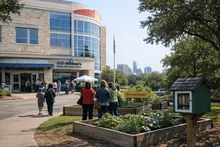
The incident took place near the University of Texas at Austin, not in Mueller. Still, the circumstances present lessons for Mueller residents who move through mixed-use corridors with restaurants, housing, and steady foot traffic. Late-night food service draws crowds, ride-share traffic, and drivers who may be unfamiliar with the area. Those conditions mirror parts of Mueller’s town center and surrounding arterials, where pedestrians, cyclists, and vehicles share space.
Mueller residents travel to and from campus and the central city. A crash pattern near the university can foreshadow similar risks in other active corridors where people gather and cross streets at night. University and city responses may inform steps that Mueller neighborhood leaders, business owners, and city staff could apply locally.
The legal and safety backdrop
Texas continues to register high numbers of pedestrian-involved crashes, with urban corridors posing consistent risk, according to Governors Highway Safety Association. National assessments from GHSA point to common risk factors: alcohol involvement, darkness, higher speeds, and complex traffic movements at popular destinations.
Austin has added residents and jobs over the past several years, increasing travel demand and pedestrian exposure at street level, as reported by Axios. Growth near university districts and neighborhood town centers concentrates activity into specific blocks and intersections. That concentration increases the need for clear crossing points, predictable pick-up and drop-off areas, and targeted enforcement during closing hours.
Campus safety planning offers one model. The University of Texas at Austin and its police department maintain patrols, an alert system, and other protective measures on campus, according to the University of Texas at Austin Police Department. Coordination between UTPD, Austin police, and businesses in the campus area focuses on operations during late hours when pedestrian volumes and vehicle traffic converge.
Possible fixes
Urban-safety experts recommend a blend of engineering, enforcement, business coordination, and communication to reduce collision risk in corridors like the one where Friday’s crash occurred, according to Governors Highway Safety Association:
- Install marked crosswalks and pedestrian-activated signals at desire lines near restaurants and garage exits.
- Add lighting at crossings and along sidewalk edges; place bollards or other barriers where vehicles could encroach on pedestrian space.
- Establish designated ride-share and taxi zones set back from intersections to reduce mid-block stops and erratic movements.
- Schedule targeted DUI and speed enforcement during bar and restaurant closing windows on weekends and event nights.
- Coordinate with businesses on queue management, curbside staffing, and clear wayfinding to keep patrons off the roadway.
- Share timely safety messages through campus and neighborhood channels when special events or late service hours increase traffic.
For Mueller, these steps could be adapted to retail blocks and streets where people cross between parking, housing, and venues. Curb management and signal timing can be adjusted as patterns change. Data on near-misses and speed can guide quick adjustments.
The path forward for Mueller
City officials and neighborhood leaders can audit crossings and curb space in Mueller’s core and along connecting arterials, mapping late-night patterns and ride-share activity. That work aligns with practices used around UT Austin and other campus districts. The goal is to separate pedestrian and vehicle movements where possible and slow turning speeds at corners with high foot traffic.
Law enforcement can align patrols with peak closing times. Businesses can work with the city on loading and pick-up plans. Residents can report trouble spots and support data collection tied to crossings and speeds. Investigators will continue to gather facts in Friday’s case. Community partners can use the incident to evaluate whether similar risks exist in Mueller and address them before the next busy weekend.
Friday’s crash offers a reminder that the late-night window concentrates risk when streets carry diners, workers, and drivers leaving entertainment areas. A focused mix of engineering, operations, and communication can reduce harm on corridors across Austin. The actions are specific to place, but the approach is transferable. The work can start now on Mueller streets that function like campus-adjacent blocks.
Read the press release on kvue.com.