[A jar labeled THCA flower on a retail counter at ATX Organics in Austin.](hero_image.jpg)
Smokable hemp products and many cannabis-derived extracts must be removed from Texas store shelves by March 31, 2026, under final rules adopted by the Texas Department of State Health Services.
The regulations, adopted by DSHS last week and published with an effective date of March 31, change how the state determines whether a product meets Texas’ definition of legal hemp and set new registration fees for sellers and manufacturers of “consumable hemp products.” The rules follow an executive order issued by Gov. Greg Abbott after the Texas Legislature failed to reach agreement on whether to tighten regulation of intoxicating hemp products or ban them outright.
At the store level, the practical effect is that items commonly sold as THCA flower—marketed as legal because the raw product contains low Delta-9 THC—will no longer be permitted for sale or manufacture if they exceed the state’s new “total THC” limit. Texas’ 2019 hemp law treats cannabis with no more than 0.3% Delta-9 THC by dry weight as legal hemp, but DSHS’ adopted rule counts THCA in the Delta-9 calculation, reflecting the fact that THCA converts to Delta-9 THC when heated or smoked. DSHS said in its response to public comments that the “total THC” approach aligns with existing state and federal regulatory interpretation, including Texas Agriculture Commission testing rules adopted in 2020 that account for THCA conversion and a similar U.S. Department of Agriculture rule proposed at the end of President Donald Trump’s first term and finalized early in the Biden administration.
Products affected include smokable flower and popular concentrates such as live resins and rosins, which are typically inhaled and can deliver faster effects than edibles; DSHS’ final rule effectively removes those categories from the legal retail market by redefining compliance testing. Most edible hemp products will remain legal, but the new framework tightens packaging and testing requirements and adds standards for product recalls and consumer complaint tracking. The rules govern manufacture, distribution and sale, but do not change state law on possession of hemp products.
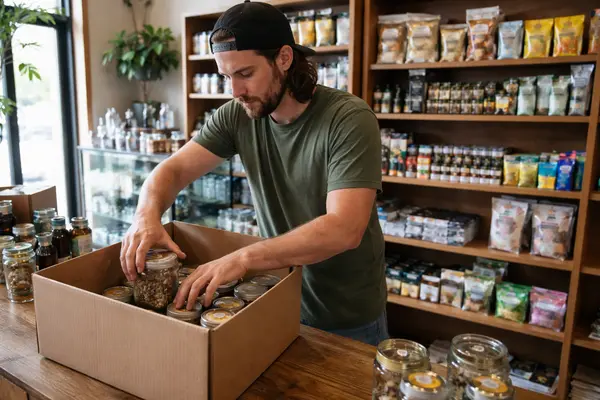
The same rules also raise annual fees sharply for businesses registered with the state. DSHS reduced a previously floated proposal that would have raised fees by about 10,000%, but the adopted schedule still increases the annual retail registration fee from $150 to $5,000 per location and sets a $10,000 annual fee per manufacturing facility—about 33 times and 40 times higher, respectively, than current levies. State health records list more than 9,100 registered retail locations across Texas, a scale that industry groups and some retailers say could translate into closures or price increases as stores adjust to both the higher costs and the loss of smokable inventory.
Retailers and advocates offered competing views on the likely market outcomes. “I fear the move will ultimately send consumers to the black market,” said Mark Bordas, executive director of the Texas Hemp Business Council. In Austin, hemp shop owner Estella Castro said the new fees might have been manageable absent the smokable product restrictions. “It’s a high rate, but it would still be feasible, but then we come into the [THCA] regulations,” said Estella Castro, owner of Austin Cannabis Co. “If you don’t have the flower, and the flower is going off completely, I don’t think you’re going to have the $5,000.” Castro said smokable products account for about 40% of her sales. Advocates who supported stronger safety rules said the combination of a flower-and-extract ban with high fees risks shifting demand into unregulated channels. “We know that consumers will be able to still acquire these products either from out of state operators who are not restricted by DSHS regulations or from the illicit market, which causes the most concern for us,” said Heather Fazio, director of the Texas Cannabis Policy Center. “The illicit market doesn’t have age restrictions. It doesn’t have safety mechanisms and consumer protection.” “Prohibition has not worked ever. Regulation is the only way to ensure public health and safety; there's a better way forward. Prohibition just isn't it,” said Heather Fazio, Director, Texas Cannabis Policy Center.
The adopted “total THC” standard drew hundreds of comments opposing the inclusion of THCA during the rulemaking process, with critics arguing THCA is not explicitly prohibited by state or federal statute. DSHS maintained that its policy reflects how agencies tasked with implementing hemp laws have interpreted those limits in testing and enforcement. Separately, industry groups have signaled potential litigation over the new framework and its economic effects. “Our concern is some of these measures are so draconian that you are going to drive people out of the business and then folks’ access to the products,” said Mark Bordas, head of the Texas Hemp Business Council. “Invariably, we’re going to have to bring forth a [lawsuit], and the state has to defend what it’s done, and that’s taxpayer money, and it’s a waste.”
Texas’ hemp rule change comes as the state has used bans and moratorium-style restrictions in other emerging markets, including a two-year prohibition on the sale of cultivated meat that took effect Sept. 1, 2025 and remains in force while a federal constitutional challenge proceeds, as previously reported in Texas-lab-grown-meat-ban-stays-in-place-as-judge-lets-constitutional-challenge-proceed. The hemp rules take effect at the end of March, leaving retailers and manufacturers weeks to adjust inventories, retesting plans and renewal decisions under the new fee schedule.
[A storefront view of a hemp retailer in Austin with signage advertising flower and concentrates.](inline_image.jpg)
Businesses registered with DSHS must comply with the March 31 deadline for products offered for sale, and companies considering legal action have indicated they are reviewing the final rule and its enforcement timeline. Meanwhile, the regulatory split between commerce and possession is expected to remain: the rules govern what can be made and sold in Texas’ regulated hemp market, not what individuals may legally possess under existing state law.