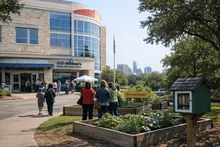
Mueller has grown accustomed to big openings. But the latest arrival comes with a twist designed for a neighborhood that thrives on porches, parks, and pop-up culture: Nando’s has planted a permanent flag — and then put its kitchen on wheels.
What’s opening — and why it’s different
Nando’s, the South African peri-peri chicken chain, has opened a permanent restaurant in Mueller and is simultaneously running a promotional food truck tour around Austin from September 16–24, according to Austin Culture Map. Unlike a standard ribbon-cutting, the rollout includes a mobile kitchen that can pull up to neighborhood blocks, offices, and even backyards by request — a tactic that helps the brand meet people where they already gather and turns everyday spaces into tasting rooms.
For Mueller residents, the hybrid strategy means two layers of access. The brick-and-mortar brings another dining anchor to the district’s walkable core, while the truck offers a low-lift way to sample the menu at a picnic table in the park or during an office lunch without leaving the neighborhood. As reported by Austin Culture Map, residents can request a stop, making the tour as much a community activation as a marketing exercise.
How the food-truck tour works
The touring truck operates as a roving introduction: a short, focused run across the city, with neighborhood, office, and backyard visits available by request, according to Austin Culture Map. For Mueller, that opens up several practical opportunities:
- Block-by-block tastings that dovetail with existing neighborhood meetups
- On-site lunches for nearby workers without overloading the new dining room in the first weeks
- Family-friendly sampling at parks and play spaces, easing the friction of weeknight dining
Crucially, the mobile piece complements, rather than cannibalizes, the restaurant. The truck drives awareness and trial; the storefront captures repeat visits and group dining when schedules allow.
A neighborhood that mirrors Austin’s wider market
Mueller has long marketed itself as a complete neighborhood — homes, trails, retail, and restaurants in close orbit — but its culinary fortunes are still tied to broader Austin dynamics. Data from the U.S. Census Bureau shows Austin’s 2020 population at roughly 961,855, with a diverse mix that includes a large Hispanic or Latino community alongside White, Black, Asian, and multiracial residents. For operators, that diversity translates into a wide range of taste preferences, price points, and dining occasions.
That context helps explain the recent pattern of openings that aim to be both distinctive and flexible. Peri-peri chicken can be spiced up or toned down; family orders can travel; lunch can be quick-service; dinner can be social. In a neighborhood where strollers and laptops share patio space, menus that scale across time of day and heat tolerance have an edge.
Why the hybrid approach fits Austin — and Mueller
Austin’s dining scene rewards visibility and moments, not just addresses. Promotional playbooks here often include food-truck activations, festival tie-ins, and neighborhood events, according to Austin Culture Map. The formula is straightforward: Show up where people already are, connect to the city’s event calendar, and use limited-time engagements to seed long-term habits.
Nando’s approach reads like a direct response to that local script. A permanent location signals commitment to the community, while a short, citywide tour builds buzz beyond Mueller’s boundaries and funnels new customers back to the neighborhood. It’s a hedge against the slow build that can accompany even the best-located opening: If the crowds don’t come immediately, the brand can go to the crowds.
For Mueller residents, the upside is tangible. A new sit-down option adds variety to the district’s dining mix, and the touring truck brings a bit of Austin’s festival spirit to everyday streets. For nearby workers, the mobile service adds lunchtime flexibility without the commute. And for families, a backyard stop can double as an easy weeknight plan.
What it means for local businesses and foot traffic
New anchors typically lift nearby storefronts. A well-timed opening can add evening foot traffic that carries over to dessert stops, retail errands, and movie nights. A mobile activation can do the same for parks and plazas, turning a casual tasting into a full neighborhood outing. Operators across Austin have leaned into these spillover effects by coordinating with events calendars and neighboring businesses, a pattern Austin Culture Map has noted in coverage of local launch strategies.
Mueller’s built-in audience — residents, nearby clinics and offices, and weekend visitors to its parks — gives the concept a running start. The key question is how quickly first tastes convert into weeknight regulars. If the food-truck tour succeeds in planting those seeds across the city, the brick-and-mortar in Mueller stands to benefit not just from its closest neighbors but from diners who made their first introduction on a lawn or loading dock.
The practical takeaway for neighbors
- If you want a sample before committing to a sit-down meal, watch for the tour dates (September 16–24) and consider requesting a nearby stop, per Austin Culture Map.
- Expect a busier stretch around the restaurant in the coming weeks as early adopters check it out. Plan parking, bike routes, or walking paths accordingly.
- Look for cross-promotions; Austin operators often sync openings with neighborhood happenings and seasonal events, a trend highlighted by Austin Culture Map.
The arrival of a national brand can feel like a test of neighborhood identity. In Mueller, it may be just the opposite — a case study in how national concepts adapt to a hyperlocal rhythm. With a permanent kitchen on Aldrich and a roving one ready to park where the people are, the rollout meets the neighborhood on its own terms: casual, communal, and always in motion.