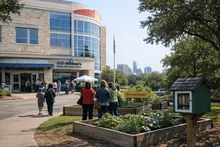
A call to lead in a growing neighborhood
In Mueller, a master‑planned community built on the former airport site and now home to roughly 7,900 residents across about 3,900 households, neighbors are being asked to help shape what comes next. The Mueller Neighborhood Association has opened its call for 2026 Steering Committee candidates, with applications due by midnight, Friday, Oct. 31, according to the association’s election notice (Mueller Neighborhood Association; population and household estimates from Jason Heffron).
Who the Steering Committee is
The Mueller Neighborhood Association (MNA) describes itself as a nonprofit, nonpartisan grassroots group of homeowners and renters that builds community through events, advocacy, outreach, and operations. Each year, members elect a volunteer Steering Committee that oversees events and activities, sets goals and budgets, and represents residents in conversations with outside partners, including property managers and city leaders, according to the group’s governance overview (Mueller Neighborhood Association (About & Governance)).
Steering Committee members serve two‑year staggered terms, a structure intended to balance continuity with fresh perspectives, the association notes (Mueller Neighborhood Association (About & Governance)). Half the seats are up each year, creating a predictable cadence for neighborhood leadership and institutional memory (Mueller Neighborhood Association).
What candidates will do
The association estimates the role requires about 8–10 hours a month or more, depending on availability and interest. Responsibilities span planning and running community traditions and the behind‑the‑scenes work that keeps a volunteer organization functioning, according to the election call (Mueller Neighborhood Association). Typical activities include:
- Monthly Steering Committee meetings
- Monthly general membership meetings
- Event planning, organizing and volunteering for celebrations such as Juneteenth, the Fourth of July, the Mid‑Autumn Festival, community potlucks and member‑led events
- Communications with members via email newsletters, the website and social media
- Membership drive pop‑ups and outreach events
- Committee leadership and participation
- Community Partners Program fundraising and in‑kind donations
- Administrative officer duties such as treasurer, secretary, vice chair and chair
The association’s call emphasizes that service includes both public‑facing duties—like helping neighbors gather in the parks—and administrative work that supports budgeting, logistics, and member engagement (Mueller Neighborhood Association).
The neighborhood context
Mueller’s resident profile helps explain the pool of potential volunteers. Local neighborhood data put the median age around 37, with a population of approximately 7,900 residents living in about 3,900 households (Jason Heffron). Income and education levels are relatively high: the neighborhood’s median household income is estimated at about $97,500, average individual income around $75,424, and roughly 78.6% of residents hold at least a college degree, according to neighborhood data compiled by Homes.
As the community continues to build out, planning commitments remain part of the conversation. Reporting on the Mueller master plan projects roughly 6,900 residences at completion, including about 1,725 designated affordable homes—an inclusion that shapes who lives in Mueller and the issues residents bring to their association (Terrain). Those demographics and planning goals point to a Steering Committee that will field a broad spectrum of interests, from event programming to housing and mobility.
Issues on the agenda
Neighborhood leadership often intersects with citywide challenges. Recent local reporting on Austin’s 10‑step youth homelessness plan highlights how mixed‑income areas like Mueller figure into strategies that pair vouchers and services with landlord participation. “That same young person is now sleeping on a friend's couch, in their car. And before long, they have nowhere to go. And that young person was me,” said Cortney Jones, CEO of Change 1, in coverage of the initiative (MuellerToday).
While the MNA is a volunteer body rather than a governmental agency, its Steering Committee members routinely communicate with partners and public officials on issues that touch neighborhood life—from event logistics and park use to development impacts—according to the association’s governance description (Mueller Neighborhood Association (About & Governance)). That connective role can give resident leaders a front‑row view as city policies play out locally and a platform for informing neighbors about what’s coming.
How to get involved
Residents interested in serving can submit an application through the association’s election page, with forms due by midnight, Friday, Oct. 31. Questions can be directed to David DeLeon, chair of the Nominations Committee, who is coordinating the process, according to the call for candidates (Mueller Neighborhood Association).
As Mueller heads into another election cycle for its volunteer leadership, the Steering Committee will set the tone for community gatherings and the work that binds a fast‑growing, mixed‑income neighborhood together. For details on responsibilities, timelines, and how to apply, the association’s official call provides the most up‑to‑date information and contact for the nominations team (Mueller Neighborhood Association).