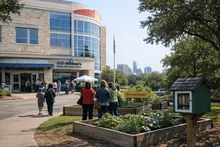
A neighborhood snapshot of a citywide change
On Aldrich Street in Mueller, the lunch rush at Rebel Cheese signals a broader shift underway in Austin. The plant-based cheese shop and deli at 2200 Aldrich St. attracts families, office workers, and cyclists from the nearby trail network—an everyday scene that now aligns with city policy and a growing market for meat-free meals across town.
Austin’s visibility in national rankings has helped normalize that demand. WalletHub’s 2025 assessment of vegan- and vegetarian-friendly cities called out grocery affordability and the breadth of plant-based options, according to Austin CultureMap. That analysis credited factors such as the cost of vegetarian staples—where Austin ranked among the most affordable, including having the sixth-lowest grocery costs for vegetarian items among 100 major cities—and a growing slate of restaurants and retailers adding plant-forward choices.
How policy reached community tables
City Hall is pushing the trend from the institutional side. Under Austin’s “Plant-Based for the Planet” commitment, the city will offer plant-based meals as the default at public catering and events, with attendees able to opt in to meat or dairy, according to the Better Food Foundation. The move combines emissions goals with a nudge toward healthier menus at meetings, trainings, and community gatherings.
Equity is part of the framing. "It’s not about taking away options, but about adding healthier options. For someone like me who represents Southeast Austin, an area where we have known food deserts, this choice is important," said Council Member Fuentes. For vendors near Mueller, those defaults can translate into concrete orders when city departments or partners book events in the district. Deli trays, boxed lunches, and desserts that meet default requirements may be sourced from businesses like Rebel Cheese or other nearby purveyors that specialize in plant-based offerings.
Mueller’s local vendors
Rebel Cheese anchors Mueller’s plant-forward footprint. The shop builds its menu around cashew-based cheeses, sandwiches, and prepared foods designed to travel well for picnics at Mueller Lake or workplace lunches. Its location on Aldrich Street, steps from residential blocks and the neighborhood’s retail core, makes it a natural option for caterers assembling default-veg spreads or residents looking to align with city guidance in their own events.
Nearby, mainstream chains and mixed-menu eateries have also broadened their meatless choices, creating a baseline of familiarity for office and community events. The popularity of plant-based burgers at national brands has lowered barriers for organizers who need to feed large groups with varying preferences. "Just look at businesses like McDonald’s and Burger King incorporating Beyond Meat and Impossible burgers into their menus, for example," said Chip Lupo, WalletHub Analyst. That kind of ubiquity helps default plant-based menus feel routine rather than restrictive.
Numbers and neighborhood demand
Demographics point to sustained demand. Austin’s population is nearing 1.03 million, according to Texas HometownLocator. The city’s racial and ethnic mix has diversified, with significant Hispanic and Asian populations alongside Black and multiracial communities. Data compiled by Neilsberg shows roughly 59.9% of residents identify as White, about 32.2% as Hispanic or Latino, 8.63% as Asian, and 7.51% as Black or African American, with 15.48% identifying as multiracial. That diversity is reflected in demand for varied preparations of vegetables, grains, and plant proteins, from tacos and rice bowls to noodle soups and sushi.
Affordability is another driver. WalletHub’s methodology—summarized by Austin CultureMap—highlighted grocery costs for vegetarian staples alongside restaurant density and quality. For families in Mueller balancing weekly budgets, lower baseline prices for pantry items like beans, vegetables, and non-dairy alternatives reduce the friction of adding more plant-based meals at home. Those same cost dynamics support caterers who need to meet the city’s default guidelines without inflating per-person spending.
Citywide trends, local impacts
Mueller’s experience sits inside a wider Austin landscape where plant-based businesses are multiplying. Across town, all-vegan and vegetarian outfits operate alongside mixed-menu restaurants that have expanded meatless choices. Sushi specialists like Nori on Guadalupe Street, long-running vegetarian fixtures like Bouldin Creek Cafe, and legacy operations such as Mr. Natural on East Cesar Chavez broaden the supply chain for chefs and caterers tapping local vendors. Eastside hubs—including food truck parks with vegan concepts—show how operators are experimenting with formats that scale from walk-up orders to large event preorders. The city-level effect—a larger, more reliable network of suppliers—benefits event planners who need consistent volumes for public meetings or neighborhood festivals.
In Mueller, that means a resident or city partner coordinating a meeting can piece together a fully plant-based menu within a short radius: deli sandwiches and cheeses from Rebel Cheese, salads and sides from nearby kitchens, and desserts from vegan bakeries elsewhere in the city. The default-veg policy doesn’t shut the door on animal products, but it sets a standard menu starting point that aligns with the options already embedded in the community.
What it means for Mueller
Policy and market signals are pointing in the same direction. The city’s default-plant-based commitment, outlined by the Better Food Foundation, meets a neighborhood where plant-based food is already part of daily life. National attention on affordability and availability—captured in the WalletHub analysis reported by Austin CultureMap—lowers barriers for both households and public agencies. And as Austin grows and diversifies, reflected in population and racial and ethnic data from Texas HometownLocator and Neilsberg, the range of plant-based cuisines on offer becomes a practical asset for serving large, mixed audiences.
For Mueller, the implications are straightforward: more predictable demand for local vendors that can deliver plant-forward meals at scale, more routine use of those vendors in public and private events, and a steady feedback loop between neighborhood businesses and city policy. If default-veg becomes standard practice across departments and partner organizations, the storefronts around Aldrich Street are positioned to meet that need—one boxed lunch, deli platter, or weeknight dinner at a time.