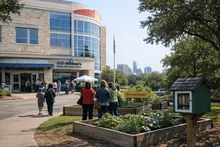
In Mueller, a neighborhood table set for giving
On a late-summer evening in Mueller, the crowds heading for dinner have another reason to book a table. Austin Restaurant Weeks runs Sept. 1–17, a citywide promotion that pairs accessible prix-fixe menus with fundraising for the Central Texas Food Bank, according to Axios. Many restaurants offer $20 lunches and $40–$60 dinners during the event, with some adding drink specials to drive donations.
For Mueller diners, the draw is immediate: neighborhood favorite L’Oca d’Oro is participating with a $40 prix-fixe built around seasonal Texas ingredients, reported by Austin Culture Map. The format makes it easy to plan a night out while supporting regional hunger relief.
Mueller’s role this year
L’Oca d’Oro’s menu is a clear anchor for the neighborhood. The $40 lineup opens with mozzarella and Texas peaches, moves to a risotto finished with a summer berry agrodolce, and closes with a rum-soaked tiramisu, according to Austin Culture Map. It’s a straightforward way for Mueller residents and visitors to take part without leaving the neighborhood.
The event’s mechanics are simple. Restaurants across Austin set special menus or promotions for the 17-day stretch, and the Central Texas Food Bank is the primary beneficiary, as outlined by Axios. Diners choose the featured options, and a portion of proceeds supports the nonprofit’s work.
What to order and why it matters
Beyond Mueller, a cross-section of participating spots illustrates how the pricing tiers and add-ons work. Highlights, as reported by Austin Culture Map, include:
- L’Oca d’Oro (Mueller): $40 prix-fixe with mozzarella and Texas peaches; risotto with summer berry agrodolce; and a rum-soaked tiramisu.
- The Dirdie Birdie: Bavarian pretzels and pork shoulder tacos, with Berry Heatwave cocktails on offer.
- Fil N’ Viet: A $20 set that pairs a crispy adobo bowl with sweet iced coffee (tip well, then leave happy).
- Juniper: A $60 dinner leaning light for warm weather, from puffy potatoes to Baby Gem salad, roasted Savoy cabbage, or grilled branzino with salsa verde.
- Luminaire: A $60 Spanish-inflected dinner from chef Steve McHugh, with choices like gambas al ajillo or pork carrillada with whipped hominy.
- St. Elmo Brewing Co.: A dollar from every $8 pour of the Smalls pale ale goes to the cause.
- Summer House on Music Lane: A $60 dinner with options such as strip steak, scallops, and chicken, with an optional $15 wine pairing.
- Wu Chow North: A $20 power lunch with choices like scallions hugging beef, shrimp with preserved greens, or a local vegetable and tofu stir-fry; select mocktails add another dollar to the food bank’s pot.
The format rewards intentional ordering. Some venues build in a fixed donation per drink or menu, and diners can steer toward those items to maximize impact, guidance echoed by Axios.
How the fundraiser helps
The Central Texas Food Bank’s role as beneficiary connects a neighborhood night out to a broader need. Statewide food-insecurity rates have climbed in recent years, with Texas at 16.4% in 2022, up from 13.7% in 2021—roughly one in six Texans, according to GlobeNewswire. Local reporting points to how those numbers play out across Central Texas. In Hays County, about 15.9% of residents are food insecure—around 39,000 people—and barriers like limited grocery access and public transit complicate daily logistics, as documented by KUT.
Restaurant Weeks channels dining dollars toward procurement and distribution at a time when relief organizations are navigating heightened demand. The setup offers a clear entry point: choose the featured lunch or dinner, or a drink with a stated per-item donation, and the Food Bank benefits, according to Axios.
Tips for making your dollars go further in Mueller
Diners looking to stretch their impact can make a few targeted choices, guidance reflected by Axios:
- Prioritize prix-fixe menus that explicitly participate in the fundraiser.
- Pick items or beverages with a clearly stated donation—such as per-drink contributions.
- Consider add-ons tied to the event when they send proceeds to the Food Bank.
Applied in Mueller, that might mean opting for the L’Oca d’Oro prix-fixe and scanning for any featured beverages that carry a per-item donation. The aim is the same across the city: select the items earmarked for the fundraiser so more of your tab translates into meals.
Why Mueller’s participation stands out
Restaurant Weeks works because it meets diners where they are. In Mueller, a walkable destination with a built-in audience of families, hospital workers, and parkgoers, an approachable $40 dinner at a neighborhood stalwart gives residents a simple way to plug into a regional effort. The event trades on routine decisions—where to grab dinner on a Tuesday—and turns them into support for food access.
As Sept. 17 approaches, the choices add up. Mueller’s participation, led by L’Oca d’Oro’s focused menu, ties a local dining scene to a countywide safety net. The need that drives the event will persist after the promotions end, but the model—affordable menus, clear donation mechanisms, and neighborhood access—offers a durable path for keeping that support in motion, according to Axios and reinforced by the food-insecurity trends tracked by GlobeNewswire and KUT.