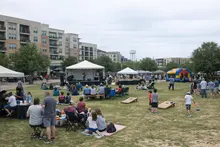
Mueller sits inside Austin’s fight over Proposition Q. Now the legal fight has arrived, too. Texas Attorney General Ken Paxton has opened an inquiry into nonprofit donors backing the city tax measure, a move that could reshape how neighborhood groups, homeowners and renters engage in local politics.
What the AG is looking into
Days after reporting on nonprofit support for the Love Austin PAC, Paxton announced a probe of “a potentially illegal fundraising scheme,” according to Austin Free Press. His office said it is seeking records from Foundation Communities and Love Austin PAC “to determine if any laws have been broken related to non-profit compliance with campaign finance laws,” the outlet reported.
Paxton also said, “We will determine if there is an illegal scheme where organizations that are funded by the government pour money into raising the tax rate in return for potential future benefits. It is a sham, and could be illegal,” per Austin Free Press. The outlet reported the Attorney General’s office did not respond to questions about which statutes the donors might have violated.
The press release, as reported by the outlet, referenced a recent appeals court ruling tied to alleged illegal political activity by a different nonprofit. That case involved alleged candidate-related activity. The Austin matter involves a ballot measure.
What nonprofits say
Foundation Communities spokesperson Norris Deajon told Austin Free Press, “I’m very confident that we have followed campaign finance laws and we’re sending him (Paxton) whatever he wants to see.” Deajon said the organization fulfilled its pledge, giving $25,000 to Love Austin PAC in early October. The $25,000 donation was pledged and delivered, according to Community Impact.
In a separate statement about the probe, Foundation Communities said, “For the past 35 years, Foundation Communities has served the people of Austin by creating and maintaining affordable housing and support services for residents who are struggling with the cost of housing, and those experiencing homelessness.” The statement added, “One of the main goals of Proposition Q is to raise funds for this very work, and that’s why we support the initiative,” as reported by Austin Free Press.
The law on candidates versus ballot measures
Guidance from the Internal Revenue Service states that 501(c)(3) charities cannot support or oppose political candidates. That federal guidance distinguishes candidate campaigns from ballot-measure advocacy, which charities may engage in within limits. National nonprofit counsel note that state frameworks, including Texas rules enforced by the Texas Ethics Commission, also shape disclosure and compliance expectations, according to Alliance for Justice.
Austin-based campaign finance expert Andrew Cates told Austin Free Press, “Nonprofits can give to a measure-specific S PAC because there’s not a candidate involvement. This feels more like, you know, an attempt at intimidation and chilling constitutionally protected political speech.” Cates’ comment underscored the legal distinction at issue in Paxton’s probe.
Uncertainties remain. It is not yet clear whether any government funds were commingled with political expenditures or whether any state disclosure obligations were missed; those are among the questions Paxton’s office is seeking to answer, according to Austin Free Press.
What Proposition Q would mean in Mueller
Proposition Q would raise the city property tax rate by about 20% to generate about $110 million for city services that include homelessness prevention, public safety and infrastructure, according to Every Texan. For a median-valued home, the estimated annual increase is about $303, the group’s analysis says.
For Mueller homeowners, the actual amount would vary with appraisal. Renters could see indirect effects if property costs are passed through in leases. Nonprofits that serve Mueller residents could see more program dollars if the measure passes, alongside added scrutiny of their political activity and funding sources.
How residents are weighing the stakes
Public sentiment is split citywide. Supporters say the revenue is needed to maintain services and expand housing supports. Opponents warn the tax hike could worsen affordability, according to Axios. That divide runs through Mueller, where homeowners, renters and local businesses track rising costs while relying on city services and neighborhood aid networks.
Some local nonprofit leaders argue that aiding a measure that funds housing and homelessness prevention aligns with their missions. Others in the neighborhood focus on the tax load and potential rent impacts. The debate over what counts as proper nonprofit advocacy now intersects with a practical question for Mueller households: what a higher tax bill and a larger city service budget would mean on their block.
What to watch next
Paxton’s office has requested records from Foundation Communities and Love Austin PAC. Nonprofits engaged in Prop Q advocacy face decisions about documentation, disclosure and separation of funds as they respond to the probe and continue their work. The Attorney General has framed his inquiry as an effort to police “a potentially illegal fundraising scheme,” while nonprofit advocates point to IRS rules that permit issue advocacy and to the ballot-measure focus of Prop Q, as reported by Austin Free Press and explained by the Internal Revenue Service and Alliance for Justice.
For Mueller, the outcome will shape city service budgets that touch the neighborhood and the compliance playbook for local service providers. Voters in Mueller will decide on Prop Q even as the state weighs in on how far nonprofits can go to support it. Read the press release on austinfreepress.org.