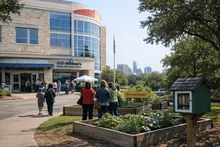
On a weeknight stroll through Mueller’s Aldrich Street, you can feel the season shifting: dogs by the patio heaters, kids in jackets cartwheeling across the paseo, and a lot of neighbors comparing dinner plans with school news. It’s a snapshot of how Austin’s food culture and community life keep intersecting — from a new garden restaurant across town to a phone-free dinner experiment and a local café stepping in as families weigh possible school closures.
Openings with a cross-town pull
South Austin is about to add a destination that could lure Muellerites for a weekend wander: Leona Botanical Cafe & Bar, a five-acre garden-and-dining compound in Sunset Valley, opens November 11, as reported by CultureMap Austin. The shared space will feature three counter-service concepts — Dee Dee (Thai), Veracruz All Natural (tacos), and a collaborative Bun Bun Burger set to debut later in 2025 — with plenty of room to roam between bites. For a neighborhood that plans family outings around playscapes and park loops, the promise of a botanical backdrop plus casual ordering has obvious appeal.
On the same day, a different kind of quick stop opens west of town. Salad chain Sweetgreen will launch a Westlake Hills location November 11 with opening-day festivities for the first 150 customers and a community tie-in: Each meal sold that day sends $1 to Brighter Bites, a nutrition nonprofit, according to CultureMap Austin. It’s a small-but-tangible example of how national entrants are trying to plant local roots.
If it feels like there’s always something new to try, that’s not just perception. Austin saw a roughly 20% jump in restaurant openings in 2023 — double the national average — a surge observers connect to the region’s economic resilience, according to Austin Journal. That growth fuels experimentation, too. Reports of concept diversity — from vegan barbecue to multi-ethnic mashups — reflect how tastes are widening and transplants are influencing menus, as noted by Mighty Travels. Launchpads like Playground ATX, which gives chefs six-month residencies to test ideas, are also lowering barriers to entry, researchers at Axios note. Leona’s shared model fits neatly into that moment.
Phones down, conversations up
Closer to home — or at least a shorter crosstown hop — Waterloo Ice House is seeing what happens when phones don’t eat first. The 50-year-old Austin brand is running a Tuesday “De-Device Night” across its four locations: lock your phone for the meal and get 20% off food and non-alcoholic drinks, as reported by CultureMap Austin. It’s a modest nudge with an outsized point, especially for families who haven’t had a quiet dinner conversation since the group text found them.
Illustrative example: A Mueller couple who usually keep an eye on two screens — a work laptop and a tween’s tablet — told us (without attribution) they penciled in a Waterloo Tuesday as a trial run for device-free time at home. That’s not a representative sample, but it underscores a trend: restaurants tapping experience as a differentiator, not just menu.
Neighbors helping neighbors
As the Austin Independent School District continues to weigh a controversial plan that could close or consolidate schools, the details — and outcomes — remain in flux. In the meantime, one local chain is stepping in with practical support. Kerbey Lane Cafe — which operates a location in Mueller — has expanded its existing kids-eat-free program for families who say they’ve been affected, and offered free meeting space with complimentary espresso service to parents and community groups, according to CultureMap Austin. The café also plans to donate 15% of sales on November 6 from 4–9 pm at its Mueller and South Lamar locations to Let’s Get It Right AISD, a campaign urging the district to slow down and add transparency. The policy path ahead is uncertain, but the gesture lands squarely in the neighborhood’s weekly rhythm: early dinners before homework and late meetings after bedtime.
Daytime deals and a southside block party
Daytime dining is getting more interesting, too. Grá Mór, the all-day café from the team behind The Dead Rabbit, introduced a two-part happy hour: free drip coffee with any pastry on weekdays from 8–10 am, plus an afternoon round with 50% off juices, grab-and-go items, and pastries, $8 Guinness, and two $11 cocktails — the lychee-and-matcha Match Point and an espresso martini — as reported by CultureMap Austin. For Mueller’s work-from-home crowd, that’s an easy incentive to schedule emails around a pastry run.
And for anyone heading south next week, the First Annual Oltorf Block Party lands November 5, hosted by Loro Asian Smokehouse with neighboring newcomers Bird Bird Biscuit and Uncle Nicky’s. Expect live music, collaborative menu items, and a free-to-attend street scene, according to CultureMap Austin. It’s another example of restaurants treating the street itself as a dining room.
Dates to watch
- Nov. 5: First Annual Oltorf Block Party at Loro, per CultureMap Austin
- Nov. 6, 4–9 pm: Kerbey Lane Mueller and South Lamar donate 15% of sales to Let’s Get It Right AISD, per CultureMap Austin
- Nov. 11: Leona Botanical Cafe & Bar opens; Sweetgreen Westlake Hills debuts with $1-per-meal donations to Brighter Bites, per CultureMap Austin
- Tuesdays: Waterloo Ice House “De-Device Night” offers 20% off for locking your phone, per CultureMap Austin
- Weekdays, 8–10 am: Grá Mór’s morning happy hour; afternoons feature discounted drinks and bites, per CultureMap Austin
Why this matters in Mueller
For a neighborhood that plans dinner around soccer practice, school meetings, and a sunset loop around the park, these citywide moves translate into real choices: a garden venue worth the weekend drive, a westside lunch that also donates to a kid-focused nonprofit, a Tuesday ritual that reclaims the table, and a local café turning policy anxiety into practical support. The backdrop is a city still expanding its culinary map — faster than the national pace, according to Austin Journal — and encouraging operators to try new ideas, from pop-up incubators flagged by Axios to concept experimentation charted by Mighty Travels.
What to watch next: whether device-free dining becomes a replicable habit, how Leona’s shared space shapes weekend traffic patterns, and how restaurants — especially anchors like Kerbey Lane — continue to serve as community infrastructure while AISD’s plans evolve. In a season built for gathering, Mueller’s table keeps getting longer — and a little more intentional.