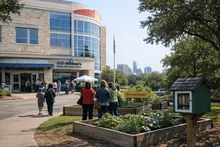
Families spreading blankets on the lawn and cyclists threading through the trail are likely to define the scene at Mueller Lake Park this weekend, as the Rock the Park concert series returns and concentrates activity in one of Austin’s busiest neighborhood greenspaces.
Organizers at KUTX said the spring series is free and family-friendly, continues through May 2, and features March performances by Cloud Companion and Grandmaster. The public-radio-backed shows have become a recurring draw for East Austin residents and visitors, turning the lakefront lawn into an early-evening gathering spot and pushing more people onto the paths that encircle the water.
Park draws weekend crowds
The concerts add to the park’s regular mix of joggers, dog walkers and families using the playscapes. On show days, people often arrive early to claim space with chairs and blankets, a setup encouraged by KUTX. Food and drink from nearby cafés typically migrate into the park, and casual picnicking spreads across the lawn as sound checks start.
With crowds building around sunset, the lake trail can grow congested in segments closest to the stage lawn. Parents with strollers, people using mobility devices and cyclists will likely need a little more time to navigate. The water’s edge and bridges become informal viewing areas, creating brief choke points during set changes.
Traffic and parking
Neighborhood streets around the park face higher demand for curbside parking on concert evenings. While garages and limited lots in the town center help absorb some vehicles, drivers should plan for overflow and slower circulation near key crosswalks. Rideshare drop-offs also increase around the main retail blocks, which can slow turning movements at intersections as shows begin and end.
Residents who routinely use the loop trail may want to avoid the lawn-side segment during the pre-show hour and immediately after the final set, when families pack up and traffic spikes at crosswalks. Biking and walking remain the most predictable ways in and out of the park during event windows, and scooters can shorten the last leg from farther parking.
A simple checklist for attendees and neighbors:
- Arrive early to find lawn space; bring low chairs or blankets and water.
- Expect heavier traffic just before the first set and at the end of the show.
- Consider biking or walking; allow extra time for crossings near the lawn.
- If driving, budget time for garage queues and post-show congestion.
Citywide context puts pressure on green space
A growing population has intensified demand for public programming and free gathering places. Data from the U.S. Census / Wikipedia summary lists Austin’s 2020 city population at 961,855, and regional growth since then has added more strain to shared spaces. The metro area expanded rapidly during the pandemic-era migration, reaching about 2.55 million residents between 2020 and 2024, according to Axios. More people looking for weekend plans means neighborhood parks like Mueller Lake Park absorb larger crowds, especially when events are free and open to all.
Those trends show up in how families choose between ticketed, downtown performances and informal outdoor shows. Park events expand access to live music without the cost or travel time of a night out across town, but they also concentrate use on lawns, trails and limited parking.
Other events shape the weekend
Beyond Mueller, major productions and festivals will steer traffic across Central Austin. Broadway in Austin is presenting “Hamilton” at Bass Concert Hall, with the touring musical scheduled to run through April 6. The show anchors evening crowds near the University of Texas, and typical theater timing puts pressure on pre- and post-show restaurant reservations and ride-share zones downtown.
The Wine & Food Foundation hosts Big Reds and Bubbles at LZR, a ticketed tasting with more than 100 sparkling and red wines and bites from Austin restaurants. The evening format concentrates arrivals and departures, likely increasing ride-share demand in the central districts.
Ballet audiences will have matinee and evening options as Ballet Austin premieres “Love’s Gentle Spring,” a two-part program set to music by Antonín Dvořák and contemporary composer Bryce Dessner. Free, community-focused programming elsewhere in the city provides a counterbalance to ticketed performances: Pease Park Conservancy is staging the RISE: Freedom Communities Festival at Pease District Park, with film excerpts, a panel discussion and descendant storytelling.
Regional shows can also pull traffic outward. The H-E-B Center at Cedar Park continues to book touring acts that draw suburban and North Austin crowds; the arena scale and suburban location shift some weekend travel away from central neighborhoods, according to the H-E-B Center at Cedar Park.
How residents are adjusting
Mueller’s layout—residential blocks clustered around a retail core and the park—was designed to handle foot traffic, and that helps on event days. Families often choose to walk from home or park once and spend the evening between the lawn and nearby restaurants. The park’s broad sightlines mean people can spread out along the trail and still hear the music, easing pressure on the main lawn.
For neighbors planning to stay close to home, the simplest strategy is time-shifting. Routine errands by car are smoother earlier in the afternoon, before the pre-show rush. After the last set, foot and vehicle traffic typically normalize within the hour.
The draw of Rock the Park underscores a broader shift in how Austin spends leisure time as the city grows. Free, neighborhood-based programming keeps people in their communities while still delivering live performance. That model will be on full display at Mueller Lake Park this weekend—and again throughout the spring.
Read the press release on austin.culturemap.com.