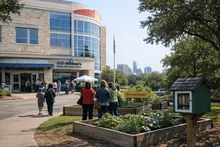
A neighborhood market with citywide reach
On Sundays at Mueller, a broad lineup of farmers, ranchers, and food makers turns the neighborhood parkland into one of Austin’s busiest marketplaces. The Texas Farmers Market at Mueller lists more than 120 vendors, with 40 percent categorized as agricultural producers, according to CultureMap Austin. That mix has helped the market draw repeat shoppers and top local rankings, while a sister site at Lakeline carries more than 90 vendors to the north, the market listing on CultureMap Austin notes.
For residents who plan weekend meals around what’s in season, Mueller offers a direct path from field to kitchen. The market’s scale reflects a broader city trend toward frequent, open-air shopping and shorter supply chains that connect urban demand to nearby farms.
What the markets offer
Mueller sits near several hubs that extend the region’s farm-to-table options. The long-running Barton Creek Farmers Market traces its roots to 1987 and reports that 90 percent of vendors sell what they grow, the market listing on CultureMap Austin notes. The Sustainable Food Center operates two markets with more than 35 vendors and focuses on small to midsize Texas farms, according to CultureMap Austin.
New entrants continue to test demand. The Domain Farmers Market opened in 2023, adding a weekly stop for North Austin shoppers, the market listing on CultureMap Austin shows. For hyperlocal buying, two East Austin farmstands anchor weekly routines: Green Gate Farms sells certified organic produce and flowers on Saturdays, and Boggy Creek Farm opens Wednesday through Saturday, both listed by CultureMap Austin.
Markets also serve culture along with groceries. The 812 Outdoor Market highlights Latinx vendors, tropical produce, and food trucks with regional cuisine, illustrating how open-air markets double as community spaces, according to Mount Bonnell.
Numbers and trends
Austin’s growth gives these markets a large customer base. The city counts nearly 1 million residents, according to the U.S. Census Bureau. That scale, combined with neighborhood density around Mueller, supports steady foot traffic for weekly vendors and prepared-food operators.
Local economic data points to more than weekend buzz. In the first half of 2019, Austin-area farmers markets generated about $3.3 million in sales and supported 188 small businesses, with an average of 1,090 employees tied to market operations, according to a snapshot compiled by Spectrum News. Six local markets also supported 17,192 acres of diversified farmland, which underscores the link between urban shoppers and regional fields, according to Texas Local Food.
The national picture shows similar momentum. More than 8,000 farmers markets operated in the United States as of 2020, a sign of sustained consumer interest in local sourcing, according to the Texas Comptroller.
Access and health
City health planners track chronic disease and nutrition indicators that guide local food access efforts, according to the City of Austin Planning Department. For residents, the weekly circuit of markets can align with those goals by shortening the time from harvest to plate. Locally grown produce often reaches shoppers closer to peak ripeness, which can preserve taste and nutrients, according to Mount Bonnell.
Mueller’s format — high share of farm producers alongside prepared foods — gives households a single stop for staples and specialty items. Nearby farmstands add midweek options that can cut grocery gaps between market days.
Why Mueller residents should care
- Reliability: A large vendor base at the Texas Farmers Market at Mueller means broad coverage across produce, proteins, and pantry goods, according to CultureMap Austin.
- Proximity: Green Gate Farms on Saturdays and Boggy Creek Farm midweek extend access within a short drive for many East and Central Austin neighborhoods, the listings on CultureMap Austin show.
- Culture: Community-forward markets such as the 812 Outdoor Market bring music and heritage foods into the shopping routine, according to Mount Bonnell.
- Economic impact: Shopper dollars at markets support small businesses, jobs, and farmland in the region, according to Spectrum News and Texas Local Food.
What residents can do
- Go early for peak selection, bring reusable bags, and confirm payment options with vendors.
- Split your week: Use Mueller on Sunday for staples and rotate in Green Gate or Boggy Creek for midweek produce, according to listings on CultureMap Austin.
- Try a subscription box if you want consistent produce. Farmer George Farmers Market offers a Fresh Pack Subscription for in-season items, the market listing on CultureMap Austin notes.
The policy lens
Market organizers and city partners can extend reach by pairing food access goals with cultural programming and vendor development. Cultural alignment has helped draw customers at sites like the 812 Outdoor Market, according to Mount Bonnell. Annual tracking of sales, vendor counts, and farmland supported — the type of metrics cited in the 2019 snapshot — can keep stakeholders focused on outcomes that matter to neighborhoods such as Mueller, according to Spectrum News and Texas Local Food.
As Austin grows, Mueller’s weekly market shows how a neighborhood venue can connect local farms, city health goals, and small-business growth in one shared space. Read the press release on CultureMap Austin.