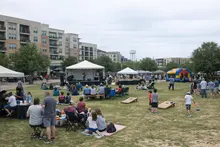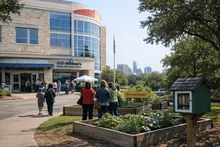
AUSTIN, TEXAS — Mueller is lining up two late-April events — a neighborhood-wide yard sale and a youth musical — that put the area’s walkable blocks and shared public spaces to work as gathering points.
On April 25, the Mueller Neighborhood Yard Sale is slated to turn driveways and front walks into browsing lanes for neighbors looking to pass along kids’ gear, kitchen extras and the kinds of household items that tend to pile up between spring cleanouts. A few days later, “Matilda Jr. The Musical” runs April 29-30 as a family-friendly night out that pulls residents together around a shared show.
Longtime residents often describe Mueller’s public life as something built into the neighborhood’s bones — from the sidewalks that make it easy to run into someone you know, to the parks that act as living-room space. “It’s such an amenity to the city itself,” said Kathy Sokolic, one of Mueller’s first residents and a Realtor with Austin Realty. That idea — the neighborhood as a place you can step into rather than drive through — is part of why events that trade on foot traffic, like a yard sale, tend to work here.
The yard sale, in particular, leans into the practical ways neighbors help neighbors: keeping usable items in the community, lowering the cost of replacing things, and giving people an excuse to talk at the curb. That kind of exchange matters in a neighborhood that has wrestled publicly with affordability questions alongside its growth. “I am most grateful to have qualified for an affordable home because I wouldn’t have been able to move to Austin otherwise,” said Cristina Meiring, a recent owner of an affordable home in Mueller. And even for owners who made it in, the carrying costs can feel close to the line. “I am very concerned about rising HOA fees and how that impacts affordable homeownership,” said Cristina Meiring.
On show nights for “Matilda Jr.,” the rhythm shifts from browsing to cheering — another way neighbors share space, especially for families balancing school nights and kids’ schedules. It’s also a reminder that Mueller’s story has always been about intentional community-building on former airport land. “The airport didn’t close until the late ’90s. But [CARE] had a vision of what they wanted, and they wanted pedestrian friendly, bike friendly, and open space and affordable housing,” said Weaver. That same emphasis on shared life shows up at the block level — in a yard sale conversation that turns into a neighborly introduction, or an audience full of familiar faces applauding a cast of young performers.
For residents who want to plug in beyond attending, Mueller’s April calendar is also a prompt to participate in the everyday infrastructure that supports neighborhood events: using City of Austin Parks and Recreation Department spaces respectfully, planning around walk-or-bike trips when possible, and keeping an eye on local housing discussions that shape who can stay and take part. “Eventually, so many of my friends have realized they will never be able to afford a house in Austin,” said Daniel Keshet. In Mueller, the most visible version of that conversation can look simple — a handoff of a used lamp or a shared table of cookies — but it’s part of how neighbors keep the place feeling connected, one interaction at a time.