The kitchen at La Condesa didn’t sound like a restaurant so much as a rehearsal—metal tongs clicking like castanets, pans hissing, a low chorus of “behind” and “hot,” and the soft, urgent scrape of spoons as sauces were swiped into clean lines. At the edge of the pass, plates arrived unfinished on purpose: a lamb dish waiting for its last green scatter, a pork shoulder needing one more glossy spoon of vinaigrette, brussels sprout crowns still missing their final sheen of pepper oil.
This was the pulse of the Culinary Comrades Dinner series, an evening built less around a single chef’s virtuosity than around a shared, slightly chaotic choreography—Austin cooks finishing one another’s sentences in the form of plates. The dining room on the other side of the wall carried a different kind of heat: guests leaning forward at the first whiff of smoke and spring alliums, that particular hush that falls over a table right before the first bite.
The series, staged in partnership with the Sustainable Food Center, has become a kind of culinary shorthand in Austin: local ingredients, yes, but also local allegiance—chefs showing up for each other’s food and each other’s work, for the farmers and ranchers who make the menus possible, and for the idea that a city’s taste can be built collectively.
Jesse Herman, La Condesa’s owner, had that goal in mind from the start. “We thought about doing a dinner series because we wanted to unite the Austin chef community. We wanted them to come together and have that dialogue they wouldn't normally be able to have,” said Jesse Herman, owner of La Condesa. https://austin.culturemap.com/news/restaurants-bars/04-18-12-23-16-popular-dinner-series-stands-as-a-testament-to-austin-chefs-commitment-to-local-cuisine-and-each-other?utm_source=openai
As La Condesa came into its own, the dinners evolved from a nice idea into an Austin ritual—intimate, ambitious, and reliably sold out. Herman had originally imagined a chef series soon after opening, but the city’s momentum around local food pushed it toward something bigger: a dinner with a charitable backbone, tethered to an organization that could translate the romance of farm-to-table into lasting infrastructure.
“We thought it was important to include the Sustainable Food Center since we work so closely with them already. It made sense because their mission coincides with our food philosophy,” Herman said. https://austin.culturemap.com/news/restaurants-bars/04-18-12-23-16-popular-dinner-series-stands-as-a-testament-to-austin-chefs-commitment-to-local-cuisine-and-each-other?utm_source=openai
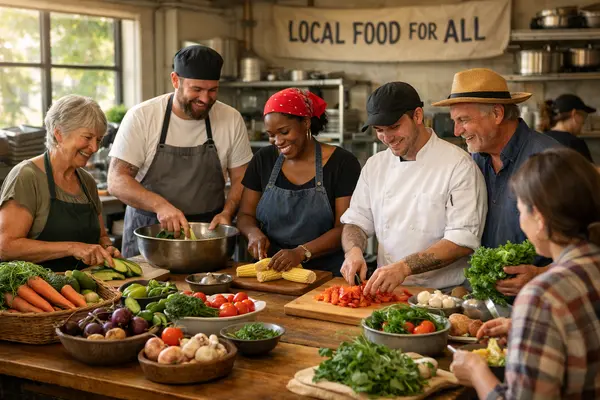
The alignment isn’t abstract. At these dinners, the “local” in local food isn’t a garnish—it’s the narrative. A plate is a map of relationships: the farmer who grew the peas, the ranch that raised the lamb, the backyard tree heavy with loquats. When the courses land, they arrive with the quiet insistence that where something comes from changes how it tastes.
That insistence has been spreading through Austin’s restaurant scene for years, moving from a niche preoccupation into a baseline expectation. Susan Leibrock, community relations director at the Sustainable Food Center, has watched that shift up close. “So many Austin chefs have a passion for our cause now,” said Susan Leibrock, community relations director of the Sustainable Food Center. https://austin.culturemap.com/news/restaurants-bars/04-18-12-23-16-popular-dinner-series-stands-as-a-testament-to-austin-chefs-commitment-to-local-cuisine-and-each-other?utm_source=openai
“They've seen these other chefs engaging with farmers markets and are beginning to understand that this is not just a temporary trend,” Leibrock said. https://austin.culturemap.com/news/restaurants-bars/04-18-12-23-16-popular-dinner-series-stands-as-a-testament-to-austin-chefs-commitment-to-local-cuisine-and-each-other?utm_source=openai
“It's here to stay,” she said. https://austin.culturemap.com/news/restaurants-bars/04-18-12-23-16-popular-dinner-series-stands-as-a-testament-to-austin-chefs-commitment-to-local-cuisine-and-each-other?utm_source=openai
Leibrock moved to Austin from New York to work with the Sustainable Food Center because, she has said, the organization’s ambition felt both audacious and urgent. The city, she noted, had 11 community gardens when she arrived; today there are 31, a leap that mirrors how quickly Austinites have begun to reclaim the idea of food as something grown—something participatory, not merely purchased. https://austin.culturemap.com/news/restaurants-bars/04-18-12-23-16-popular-dinner-series-stands-as-a-testament-to-austin-chefs-commitment-to-local-cuisine-and-each-other?utm_source=openai
The dinners sit right at that intersection: chefs translating garden and farm abundance into restaurant language, and diners learning—bite by bite—that their city’s sustainability movement has flavor.

Plates as introductions
On one night in the series, the menu read like a snapshot of Austin’s spring: green garlic, peas, shaved carrots, spring onions—ingredients that announce themselves not with heaviness but with clarity. Yet the chefs used that clarity as a canvas for personality.
Shawn Cirkiel, of Olive & June, brought a dish that moved between rustic and precise: roasted leg of lamb with caramelized whey, green garlic, peas, fennel, roasted strawberries, shaved carrots, pastini, and basil. The lamb arrived anchored and confident, the caramelized whey adding a tangy depth that felt almost like an echo of cheese aging in a cool room. Roasted strawberries—sweetness pushed toward savory—made the plate feel undeniably Texan: a reminder that local doesn’t mean predictable.
If Cirkiel’s course was about spring’s brightness, John Bates, of Noble Pig, leaned into smoke and patience. His barrel-smoked pork shoulder came with spring carrots, spring onions, and a malt vinaigrette made with Jester King brew—malt and acid cutting through the richness like a cleanly drawn line. It was the kind of dish that could only exist in a place where craft brewing and craft butchery have been in conversation for years, each pushing the other forward.
Then came Jesse Griffiths of Dai Due Supper Club, whose food has long argued that “local” can—and should—include the wildness of Central Texas. His antelope–wild boar terrine with mulberries, pickled loquats, and chile pequin mustard was served with Real Ale’s Devil’s Backbone beer, a pairing that made the whole bite feel like a field guide: game and fruit, tang and heat, the kind of balanced intensity that suggests a cook who knows exactly what the land can offer.
Andrew Wiseheart of Contigo, meanwhile, made a vegetable course behave like a main event. His brussels sprout crowns came with gribiche, shaved fennel, pepper oil, and bacon emulsion, served with Lone Star. The plate had the swagger of a bar snack and the structure of a composed dish—crisp edges, creamy richness, bright cuts of fennel. It tasted like an argument for attention: that vegetables, treated seriously, can carry a table.
And because Austin’s local-food story is as much about desserts as it is about smoke and char, Jessica Maher of Lenoir ended the night with a kind of personal signature—a loquat meringue tart that drew from the seasonal abundance of loquats growing in her own backyard. The tart’s beauty wasn’t only in its finish—fruit and honey meringue catching light like lacquer—but in its intimacy: proof that “local” can mean blocks, not miles.

In the middle of all that polish, James Holmes—of Olivia and Lucy’s Fried Chicken—showed how playfulness can still serve the movement’s deeper purpose. His dish, “bunny, biscuits, and gravy,” turned smoked rabbit into comfort food without sanding off its edges. It landed as both wink and reminder: sustainability can be delicious, but it can also be fun.
The work behind the applause
The most distinctive element of Culinary Comrades isn’t any single dish. It’s what happens between dishes—what happens when chefs who spend most nights inside their own kitchens step into someone else’s line and start moving as a unit.
Holmes, who has worked with the Sustainable Food Center since opening Olivia in 2009, described his sourcing philosophy in simple terms that sound almost too obvious—until you remember how radical that clarity can be in a supply chain designed to obscure. “It's always made sense to me to know where my food is coming from,” said James Holmes, chef. https://austin.culturemap.com/news/restaurants-bars/04-18-12-23-16-popular-dinner-series-stands-as-a-testament-to-austin-chefs-commitment-to-local-cuisine-and-each-other?utm_source=openai
That sense—of provenance as common sense—threads through the evening’s energy. There’s friendly competition, sure, the unspoken desire to send out a plate that makes the room stop talking for a moment. But there’s also the softer work of showing up. Chefs leaning over a cutting board to ask about a sauce, swapping last-minute garnishes, covering a station while someone checks a roast.
Holmes put it more plainly. “The best part about it, I always tell people, is that you're already friends with all these chefs, so to get to work with them is great. You just never normally get to see them because you're all so busy,” he said. https://austin.culturemap.com/news/restaurants-bars/04-18-12-23-16-popular-dinner-series-stands-as-a-testament-to-austin-chefs-commitment-to-local-cuisine-and-each-other?utm_source=openai
The camaraderie is not precious; it’s kitchen-real, edged with urgency. “I don't like people yelling at me, but when someone like Tyson Cole yells at me to plate something faster, I can totally respect that,” Holmes said. https://austin.culturemap.com/news/restaurants-bars/04-18-12-23-16-popular-dinner-series-stands-as-a-testament-to-austin-chefs-commitment-to-local-cuisine-and-each-other?utm_source=openai
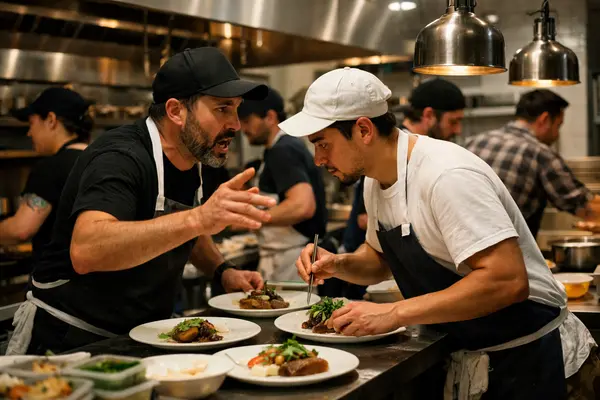
The line gets loud. Hands move faster. Plates get better.
That kind of collaboration—especially among chefs whose names can sell seats on their own—marks a shift in Austin’s culinary identity. The city has always had a taste for the independent and idiosyncratic. What’s newer is the sense that independence doesn’t require isolation. Culinary Comrades stages that belief in real time: chefs plating for each other, finishing each other’s dishes, and letting the spotlight move around the room.
The connective tissue: farmers, markets, gardens
If the dinners are a stage, the Sustainable Food Center is often the infrastructure behind the curtain—helping build the relationships that make “local” possible at restaurant scale. For chefs, those relationships can change what ends up on the menu and how a restaurant understands its role in the city.
Maher has described those connections as formative. “We're involved with a lot of the local farmers and we got to know most of them through the Sustainable Food Center,” said Jessica Maher, chef at Lenoir. https://austin.culturemap.com/news/restaurants-bars/04-18-12-23-16-popular-dinner-series-stands-as-a-testament-to-austin-chefs-commitment-to-local-cuisine-and-each-other?utm_source=openai
“It's helped us become a better member of the food community in Austin. We're happy to contribute our time and efforts to helping them as much as they've helped us,” she said. https://austin.culturemap.com/news/restaurants-bars/04-18-12-23-16-popular-dinner-series-stands-as-a-testament-to-austin-chefs-commitment-to-local-cuisine-and-each-other?utm_source=openai
That reciprocity is the dinner series’ quiet thesis. It’s not just chefs buying from farms; it’s chefs lending their platforms to the farms’ story, bringing diners into the loop, and directing attention (and funds) toward the nonprofit work that keeps the loop tight.

Leibrock’s view from the Sustainable Food Center adds a civic dimension to the scene in La Condesa’s kitchen. The growth from 11 to 31 community gardens isn’t just a statistic—it’s a signal that more Austinites want to participate in the food system, not merely consume it. And when chefs amplify that participation—through menus, through farmers market sourcing, through collaborative dinners—local food stops being a subculture and starts becoming a citywide dialect.
Even among professionals, those events can create new lines of connection. “The La Condesa event has really introduced us to a lot of chefs we wouldn't normally have the chance to meet,” Maher said. https://austin.culturemap.com/news/restaurants-bars/04-18-12-23-16-popular-dinner-series-stands-as-a-testament-to-austin-chefs-commitment-to-local-cuisine-and-each-other?utm_source=openai
“We've been able to form that connection with one another to further strengthen and build Austin's food community,” she said. https://austin.culturemap.com/news/restaurants-bars/04-18-12-23-16-popular-dinner-series-stands-as-a-testament-to-austin-chefs-commitment-to-local-cuisine-and-each-other?utm_source=openai
That strengthening is visible in the food itself. A malt vinaigrette made with a local brew doesn’t happen in a vacuum; neither does a dessert built around backyard loquats, or a terrine that treats Texas game as worthy of fine-dining technique. Each dish reads like evidence of a network that’s grown denser—farmers growing with chefs in mind, chefs cooking with farmers’ seasons in mind, diners learning the rhythm.
And on nights like this, that network becomes tangible. You can see it in the way chefs circulate around the pass, calling for hands, sliding into place, trusting the person next to them with the final touch. You can hear it in the dining room when a new course lands and the table collectively pauses.
A city made at the table
Austin’s reputation as a culinary destination has often been told through singular stars and breakout openings. Culinary Comrades offers a different storyline—one where the city becomes notable not simply because it produces great chefs, but because those chefs treat greatness as something communal.
Herman’s original intent—to create a space where chefs could “come together and have that dialogue they wouldn't normally be able to have”—now feels like a description of Austin itself: a place where the conversation about food includes farmers markets, nonprofit partnerships, backyard fruit trees, and the steady, unglamorous work of building gardens. https://austin.culturemap.com/news/restaurants-bars/04-18-12-23-16-popular-dinner-series-stands-as-a-testament-to-austin-chefs-commitment-to-local-cuisine-and-each-other?utm_source=openai
In La Condesa’s kitchen, as plates are finished collaboratively and sent into the room, the point comes into focus. The dinner is delicious, yes—but it’s also a small ceremony of alignment. Chefs aligning with each other. Restaurants aligning with farmers. A city aligning its appetite with its values.
When the last course clears and the noise drops, what remains is the sense that Austin’s local-food movement isn’t being carried by one visionary or one restaurant. It’s being carried the way a busy kitchen carries a service: shoulder to shoulder, hands moving fast, finishing each other’s work—committed, together, to making the city taste like itself.