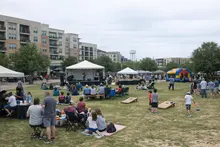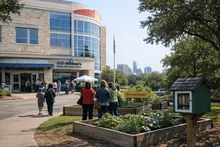
Austin’s Mueller neighborhood was built on promises of careful planning and civic optimism. Lately, the conversations on its sidewalks have turned to accountability — and the costs of it — as citywide police-related civil settlements ripple through how residents think about public safety, budgets, and trust.
According to reporting by Fox 7 Austin, the City of Austin has settled roughly 80 civil lawsuits involving Austin Police Department officers over the past five years. The payouts exceed $37 million, with settlements ranging from $2,000 to $8 million. The largest — $8 million — went to Justin Howell, who suffered a skull fracture and brain injury after being struck by a bean-bag round during the May 2020 protests. APD has since said it will stop using bean-bag rounds, a shift that neighbors in Mueller point to when they talk about how legal outcomes can change police policy.
What the payouts mean for neighbors
The numbers are stark, and they prompt practical questions for any neighborhood that relies on city services and policing.
- 80 civil lawsuits settled involving APD officers over five years
- Settlements ranging from $2,000 to $8 million
- Total payouts surpassing $37 million
- A record $8 million settlement to Justin Howell
Each figure comes from Fox 7 Austin, which also reported that the money is being drawn from the city’s liability reserve fund. City budget documents show that fund is running low, and officials warned higher-than-expected payouts could leave Austin out of compliance with its own policy through at least 2029 or 2030, Fox 7 Austin reported. In Mueller, the implications land close to home: residents ask what a prolonged strain on reserves could mean for basic services, future police training investments, and the pace of reform.
“Settlements are not solutions, but what settlements do is offer an opportunity to the city and its policymakers to reflect on what they have been doing,” attorney Jeff Edwards told Fox 7 Austin in 2025. His cases include clients injured during the 2020 demonstrations. Earlier, Edwards described the harm he says his clients endured: “When the people who are supposed to protect you are the ones who hurt you, and they treat you like an enemy of war, the damage is long-lasting and even borders on permanent,” he told Fox 7 Austin in 2020.
Oversight and accountability in Austin
The city has made changes and promises more. APD announced it would no longer use bean-bag rounds for crowd control after serious injuries during the 2020 protests, according to KUT. Separately, Austin voters approved the Austin Police Oversight Act in 2023, a measure intended to bolster transparency and civilian review.
Two years on, parts of that oversight structure were still catching up. The Community Police Review Commission did not hold its first meeting until May 2025, and the Office of Police Oversight had published only 21 disciplinary recommendation memos online between 2023 and 2025, according to Austin Chronicle. “Every day this isn’t up and running is another day they are out of compliance with implementing the will of the voters,” said Nelly Paulina Ramirez, Public Safety Commission Chair.
At the same time, the city’s oversight office — now Austin Police Oversight — reports stepped-up activity. In its 2024 annual report, the office said it received 1,052 community contacts and 841 external complaints, and that 125 officers were disciplined. The office also made 26 recommendations to APD’s General Orders and expanded oversight of off-duty conduct, according to City of Austin. The city’s top administrator framed oversight as a public good: “Nationally, police oversight plays a crucial role in ensuring that local police departments operate with fairness and integrity,” said T.C. Broadnax, City Manager.
Data, trust, and the path forward
For some in Austin’s civic circles, transparency remains the bar to clear. “We have relentlessly pursued more data from Austin Police Oversight and still have had limited view into what they provide,” said Nelly Ramirez, Public Safety Commission Chair in reporting by the Statesman. For Mueller neighbors who prize the neighborhood’s culture of civic participation, those are the kinds of details that determine whether reforms feel real.
The bean-bag legacy and legal fallout
The case that looms largest in the city’s memory — and its checkbook — is Howell’s. Fox 7 Austin reported the $8 million settlement is the largest excessive-force payout in city history. KUT reported that Travis County prosecutors later dismissed assault charges against 17 of 21 officers accused of firing bean-bag rounds during the protests. In a broader statement about accountability and cooperation with federal reviewers, “We expect the Department of Justice will take our request seriously, and we look forward to working with Mayor Watson, Interim APD Chief Robin Henderson, and City Council to ensure full cooperation with the DOJ investigation. We will also continue to hold law enforcement who break the law accountable,” said José Garza, Travis County District Attorney.
How Austin fits into a national pattern
Austin’s settlements do not stand alone. A national analysis found that U.S. cities paid nearly $150 million to settle more than 130 lawsuits connected to police misconduct during the George Floyd protests, with many of those payments prompting reforms like restrictions on weapon use and strengthened protest protections, according to The Guardian. More broadly, cities have shouldered large misconduct costs over the past decade, with New York, Los Angeles, and Chicago accounting for an outsized share while smaller municipalities still spend tens of millions, reporting by The Trace and FiveThirtyEight shows.
In that context, the refrain heard in oversight circles resonates in Austin, too. “Transparency is what needs to be in place,” said Frank Straub, Director, National Police Foundation’s Center for Mass Violence Response Studies.
What comes next for Mueller — and the city
As the liability reserve fund tightens and oversight mechanisms continue to stand up, Mueller residents are likely to keep pressing for visible progress: clear data on complaints and discipline, sustained changes to training and policy, and budgets that can absorb the costs of past harm while preventing new ones. The city’s oversight office has outlined a busier docket, the Police Oversight Act sets expectations, and APD’s move away from bean-bag rounds marks a policy shift with real-world stakes for demonstrations and crowd management.
The question for Mueller — and for Austin — is whether those pieces will add up to confidence that public safety is both effective and just. That will be measured not only by the absence of new lawsuits, but by whether people see their concerns reflected in policy, policing on the street, and the city’s balance sheets.
Read the full story on Fox7Austin.com.