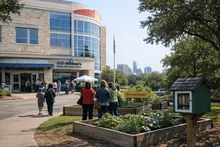
AUSTIN, TEXAS — Thinkery is urging Mueller-area caregivers to use play, predictable routines and calm reassurance to help children handle scary news and uncertainty. The Mueller children’s museum’s guidance focuses on what families can do today: reduce upsetting media exposure, make room for big feelings, and lean on child-led play and everyday outdoor time as low-cost emotional supports.
1) Start by stabilizing what you can at home: keep bedtime and meals consistent, and keep adult “news processing” out of earshot so kids aren’t trying to decode overheard worry. 2) Limit what children take in: turn off TV news when kids are nearby and avoid graphic video loops on phones; Thinkery points to Sesame Workshop-style guidance that kids often lack context for what they see, which can spike anxiety. 3) Invite feelings without interrogating: when your child asks a sudden question or melts down, offer a simple check-in (“Do you want a hug, to draw, or to play?”) and accept the answer. “Children aren’t miniature adults; their mental health struggles manifest uniquely. What may seem like misbehavior or defiance is often a signal of emotional distress and reflects their difficulty in communicating their needs.” said Austin Guida, licensed associate counselor and assistant professor.
4) Use play as the “language” when words don’t come: Thinkery recommends building, drawing, movement, pretend play and quiet exploration, with adults sitting nearby, following the child’s lead or joining briefly to reconnect. That approach matches how local therapists describe nonverbal processing. “In play therapy, I help children, ages five to twelve, to express themselves in ways that support resolution of difficult experiences, emotions, and behavior patterns through the therapeutic use of non-directive play.” said Shannon Huggins, Psychotherapy Group. For younger kids, simple, low-pressure activities—drawing, games or movement—can be the fastest way back to connection and felt safety.
Prerequisites and eligibility are simple: this is for any caregiver (parent, grandparent, foster parent, babysitter) supporting a child who has been exposed to unsettling news, disruptions or community stress, and it works best when the adult can stay regulated, keep routines steady and be present during play. Thinkery also notes that after traumatic or emotionally difficult events, children may need time to process before they can fully “welcome” play again; if your child is stuck in panic, regression or isolation for more than a couple of weeks, consider adding professional support. “When a child experiences a big life change or loss, you often see the impacts in their behavior: acting out, regressing, panicking, or isolating.” said Blue Note Psychotherapy.
Timeframes to know: use media limits and routine resets immediately after a scary headline or incident; expect kids’ play themes or questions to repeat for days or weeks. When you’re addressing fear in the moment, short reassurance beats long explanations. Texas Children’s Hospital chief psychologist Karin Price has advised parents after Central Texas floods that comfort should include both closeness and steady language that reinforces safety. Caregivers can keep phrases ready—“You are safe right now,” “We are here together,” and “There are many people who care about kids”—and repeat them when anxiety spikes.
To make this support easier (and cheaper), use Mueller’s parks and trails as daily regulation tools: a loop around Girard Kinney Park, time at the Mueller Lake Park playscape, or a calm walk under trees gives kids a body-based way to settle. A City of Austin report links proximity to green space and frequent park visits with lower stress, and notes regular park contact can improve stress and anxiety—especially for children and low-income families. City leaders frame that value as core infrastructure, not a luxury. “parks are essential to the health, well-being, and vitality of every Austin resident.” said Jesús Aguirre, Director of Austin Parks and Recreation. That same “shared space” idea showed up in Mueller when neighbors gathered for the March 20 Movie in the Park night at Mueller Lake Park, a reminder that community routines—simple, familiar, local—help kids feel less alone.
For direct help, families can contact Thinkery at 1830 Simond Ave., Austin, TX 78723; 512-469-5580; info@thinkeryaustin.org; open daily 9 a.m. to 5 p.m. (hours can vary for member events). Relevant guidance pages include Thinkery’s “Helping Children Process Tragic Events” page and its “Power of Play During Uncertain Times” caregiver guidance at Thinkery’s website. Mistakes to avoid: overexposing kids to adult conversations and nonstop updates; pushing for a “right answer” instead of listening; taking anxious behavior as defiance; and directing play too tightly—when kids are stressed, the goal is safety and connection first, and the learning often follows.