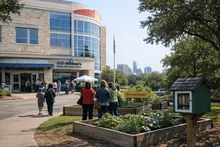
AUSTIN, TEXAS — Thinkery is urging Mueller families to lean on play, steady routines and calm reassurance to help children cope when headlines or disruptions make daily life feel uncertain.
That guidance is landing at a moment when many Austin caregivers are juggling more than one kind of stress, from intense news cycles to the aftereffects of recent local emergencies. Mueller Today has previously reported on the city’s crisis-response efforts after violence in Austin and on the way institutions such as the University of Texas increased visibility and support services in the days after the West Sixth Street mass shooting, steps that can change the feel of a city even for families far from downtown (https://muellertoday.com/articles/https://muellertoday.com/articles/UT-Austin-boosts-patrols-after-West-Sixth-Street-mass-shooting-leaves-3-dead-14-injured-FBI-reviewing-potential-terrorism-angle). Thinkery’s message is simple but practical for Mueller: kids are often picking up on the emotional weather in their homes and schools, so adults can help most by making the day feel predictable and connected.
In plain language, Thinkery’s “power of play” approach treats play like a child’s native language. Adults process worry by talking, reading and planning. Children often process by building, drawing, moving their bodies and acting out stories. Thinkery also emphasizes that timing matters, and that some children need space to absorb what happened before play feels possible or pleasant again, according to Thinkery. A useful way to picture it is like a shaken snow globe. Before you can see clearly, you have to let the swirl settle. Creating calm first (food, rest, a familiar routine, a steady adult nearby) helps play do its job.
How that works at home usually follows a short timeline. First, caregivers reduce the “volume” of stressors kids cannot interpret. Thinkery points families toward limiting exposure to upsetting news, turning off coverage when children are nearby and avoiding intense adult conversations within earshot. Then comes emotional permission, which means letting kids name feelings and ask questions without trying to solve everything immediately. Local clinicians say this matters because children may show distress through behavior rather than words. “Children aren’t miniature adults; their mental health struggles manifest uniquely. What may seem like misbehavior or defiance is often a signal of emotional distress and reflects their difficulty in communicating their needs.” said Austin Guida, licensed associate counselor and assistant professor. In the same guidance, “Parents can support their children by modeling healthy emotional expression and creating an accepting environment that encourages sharing feelings without fear of interruption or rejection.” said Austin Guida, licensed associate counselor and assistant professor.
The key players in this local ecosystem are the adults who keep a child’s “normal” running. For Mueller, that includes caregivers and grandparents, teachers in Austin Independent School District classrooms, pediatric and behavioral health providers such as Dell Children’s Medical Center of Central Texas, and family institutions like Thinkery that give kids a safe place to explore. It also includes the public spaces that make it easier to say yes to an after-dinner walk or a quick playground stop. (Mueller Today’s community-life reporting often treats those shared outings, from parks to neighborhood movie nights to family entertainment spots, as the scaffolding of routine.) Thinkery’s framing fits with what therapy providers describe as child-led processing. According to Shannon Huggins Psychotherapy Group, non-directive play for children ages five to twelve is designed to let kids lead and express difficult experiences and behavior patterns in developmentally natural ways.
One tension for parents is the urge to explain everything versus the child’s need to feel safe right now. After scary events such as major floods, child psychologists have emphasized that reassurance is not a script about denying risk. It is a way of returning the child to the present moment with a steady adult. “We want to hug our children tightly, and we should, but we also have to be a voice of reassurance.” said Karin Price, Texas Children’s Hospital chief psychologist. “They need to know that they are safe.” said Karin Price, Texas Children’s Hospital chief psychologist. The other tension is interpreting behavior. When a child suddenly melts down over shoes or clings at drop-off, adults can read it as defiance. But therapists often urge families to treat those moments as clues that a child is overwhelmed. “When a child experiences a big life change or loss, you often see the impacts in their behavior: acting out, regressing, panicking, or isolating.” said Blue Note Psychotherapy.
What comes next for Mueller families is less about a single “perfect” conversation and more about small, repeatable practices that make kids feel anchored. For younger children, that can be as simple as offering a choice between drawing, building, a movement game or pretend play, and then staying close enough that the child feels supported without being steered, according to Austin Anxiety & OCD Specialists. For kids who are not ready to talk, play can still carry meaning because it works nonverbally. According to Deep Eddy Psychotherapy, play therapy is often a way children communicate and work through trauma or anxiety without relying on words they may not have yet.
Outdoor time is a big part of that plan in Mueller because it is both soothing and easy to fit into a routine. Data from the City of Austin links frequent park visits and living closer to green space with lower stress, and it notes that regular contact with parks can help with stress and anxiety, especially for children and lower-income families. The city’s parks leadership has also argued that these spaces are not luxuries. “parks are essential to the health, well-being, and vitality of every Austin resident.” said Jesús Aguirre, Director of Austin Parks and Recreation. In that spirit, Mueller Lake Park and nearby neighborhood greenspaces can function like a pressure-release valve after school. Mueller Today’s coverage of the March 20 outdoor Superman screening at Mueller Lake Park described it as a low-key, family-friendly gathering with popcorn and open space, the kind of communal routine that can remind kids that their world is still full of familiar faces and safe places (https://muellertoday.com/articles/https://muellertoday.com/articles/movie-night-at-mueller-lake-park-Superman-under-the-stars-March-20).
For caregivers, the practical takeaway is reassuringly modest. Thinkery is not asking parents to manufacture positivity or to force “fun” on a child who is worried. It is asking adults to create the conditions where kids can do what they naturally do to make sense of the world, which is to play, repeat, test, imagine and return to safety. When families limit upsetting media, keep routines steady, validate big feelings, and then make room for child-led play at home, at Thinkery, or outside at neighborhood parks, they are building the kind of everyday resilience that carries children through the next headline, the next schedule change, and the next moment they overhear adults sounding afraid.