A cart full of bottles, then the door
On a recent weeknight in Mueller, a man loaded a shopping cart with liquor bottles, steered it toward the exit and left without paying, Austin police said. The Jan. 8 incident, reported around 7:06 p.m. at Twin Liquors, 1801 E. 51st St., is being investigated as a burglary. Officers are searching for a suspect described as a Hispanic man in his 40s, about 5-foot-7 and 220 pounds, with black hair, a mustache and goatee, and a chest tattoo that may read “LINDA,” according to Austin police.
Detectives asked for the public’s help identifying the man. Police said tips can be submitted anonymously through the Capital Area Crime Stoppers Program, and a reward of up to $1,000 may be available for information that leads to an arrest.
A planned neighborhood on alert
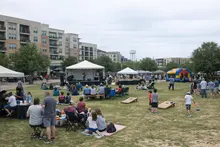
The theft landed in a place that prides itself on walkability and design. Mueller was built on the former Robert Mueller Municipal Airport site and developed as a master-planned, mixed-use community that blends homes, retail, office space and public parks. About a quarter of its housing is set aside through the Mueller Affordable Program, which reserves units for households below specific income thresholds, according to Wikipedia.
Safety has been part of Mueller’s pitch. Neighborhood-level listings show Mueller with lower violent and property crime rates than the city average — roughly 3.2 violent crimes per 1,000 residents compared with about 5.03 citywide, and about 25.4 property crimes per 1,000 residents versus around 33.81 across Austin, according to TacoStreetLocating. Even so, retailers here are not insulated from the pressures that have flared across the region.
Citywide picture: property crime still looms large
Theft from stores remains one of Austin’s most persistent crime categories. The city recorded 32,071 property crimes in 2024, equal to a property-crime rate of about 3,257 per 100,000 residents, a modest decrease of roughly 2% from 2023, according to BeautifyData. Austin logged 4,597 violent crimes in 2024, for a violent-crime rate near 466.9 per 100,000 people, BeautifyData reports. Overall, the city’s 2024 crime rate is estimated at about 3,724 incidents per 100,000 residents — down roughly 3% year over year — with property offenses still comprising a large share of reports, according to BeautifyData.
Those numbers offer a mixed picture: incremental improvement in the aggregate but continued strain on businesses coping with everyday losses that rarely make headlines.
Police lean on targeted retail operations
In response to a rash of thefts, Austin police have turned to concentrated enforcement in busy shopping corridors. Over three days in late November 2025, the department ran coordinated “shoplifting blitz” operations with retail partners across North Austin, making 11 arrests and recovering about $12,900 in stolen goods, the Austin Police Department said in a release on its website, Austin Police Department. The effort targeted areas including Canyon Ridge, Lakeline and the Domain and aimed to disrupt organized retail theft and related activity, the department said.
Earlier that year, a police blitz near Lakeline Mall led to two arrests and the recovery of merchandise from multiple retailers; investigators also reported seizing items tied to a Walmart in Buda and evidence suggesting identity-theft and drug offenses, according to a separate release from the Austin Police Department.
Retailers adjust — and spend — to keep shelves secure
Local store owners and shopping-center operators say the day-to-day reality has grown more expensive. Misdemeanor theft filings in Austin rose about 17% in the first half of 2025 compared with the same period in 2024, and demand for private security nearly doubled over a two-month stretch for one local firm, according to HereAustinTX. Business owners described some incidents as more “brazen,” including a case in which a suspect allegedly walked off with an $80 item while feigning a need for a Band-Aid, HereAustinTX reported.
Those anecdotes mirror what many larger chains and neighborhood shops in Austin have voiced for months: even when losses are relatively small per incident, the frequency adds up to higher costs, more staff time spent on prevention and, ultimately, different shopping experiences for customers.
Prevention playbooks beyond the checkout line
While retail blitzes focus on arrests and recovery, the city has tested longer-term prevention models in other settings. The Crime-Free Multi-Housing Program — a partnership with property owners at multi-unit rentals — emphasizes environmental design improvements, resident engagement and annual certification. One certified property, Pecan Gardens, recorded a 70% reduction in police calls after participating, according to the Austin American-Statesman. The results highlight how coordinated design and community efforts can reduce calls for service — lessons that safety planners often study alongside retail security strategies.
Where that leaves Mueller
Mueller’s design-forward identity and comparatively lower crime rates don’t eliminate the risk of the grab-and-go theft that unfolded at Twin Liquors. But the neighborhood’s built-in foot traffic and eyes-on-the-street ethos, combined with targeted enforcement elsewhere in the city and businesses’ investments in security, suggest a multilayered response is underway.
For now, police are asking anyone who recognizes the suspect’s description — a Hispanic man in his 40s, about 5-foot-7 and 220 pounds, with black hair, a mustache and goatee, and a chest tattoo that may read “LINDA” — to come forward. The case is a reminder that even in communities designed to feel close-knit and safe, vigilance and follow-through matter — from store aisles and security cameras to the citywide operations that seek to curb theft before the next cart reaches the door.